
One hire in Tanzania can open a market. It can also open a pile of tax, payroll, and contract work if you set it up the wrong way.
Using an employer of record in Tanzania gives you a faster path. You can hire without opening a local entity, but you still need to get pay, leave, contracts, and termination rules right.
If you’re testing East Africa, converting a contractor, or adding a sales or support hire, this checklist will keep you focused on what matters.
Why Tanzania is on more hiring plans in 2026
Tanzania keeps showing up on expansion plans because it’s a practical market for first hires. Remote-first startups use it to add local knowledge in East Africa. Scale-ups use it for sales, business development, operations, and support. Larger firms use it to test demand before they commit to a full office.
Recent market summaries also point to steady growth in formal employment and a healthy medium-term economic outlook. That doesn’t mean every role is easy to fill. It does mean more companies are taking the market seriously.

For many teams, the real issue isn’t interest in Tanzania. It’s the setup burden. Opening a company for one or two hires can feel like building a whole warehouse to store one box. You need registrations, payroll processes, local contracts, tax handling, and ongoing compliance. An EOR removes most of that scaffolding.
That’s why this model appeals to startups and investor-backed companies that need speed with less risk. Published hiring guides, such as this 2026 Tanzania EOR update and a broader country hiring overview for Tanzania, make the same point: an EOR can help you hire local talent without first setting up a Tanzanian legal entity.
Still, speed only helps if the details hold up. Tanzania’s wage rules are sector-based, payroll contributions need attention, and termination steps are not something to improvise. That’s where a proper checklist matters.
How an Employer of Record works in Tanzania
An EOR becomes the legal employer on paper. Your company still runs the day-to-day work. You set goals, manage output, and decide who joins the team. The EOR handles the local employment layer, including contracts, payroll, statutory deductions, benefits, and required filings.
That split matters because it keeps control where you want it, while moving the legal employment burden to a provider set up for it. If you’re converting a contractor who already works like a full-time employee, this can also reduce misclassification risk. The person moves onto a compliant local employment contract, and your operating model becomes much cleaner.
In Tanzania, that usually means the EOR manages payroll in Tanzanian shillings, withholds PAYE, handles social security and other statutory items, and keeps records ready if authorities ask questions later. Many providers also support work permits for foreign nationals, although permit timing will stretch the hiring window.
If Tanzania is only one country in a wider plan, local differences become obvious fast. Rules around contracts, payroll notices, and terminations can change sharply from one market to the next, which this Ireland Employer of Record guide illustrates well.
This is also where provider style matters. Some EORs are self-serve tools with limited support. Others are more hands-on. Expandbase is one option to compare if you want guided onboarding rather than a do-it-yourself setup. Its published model focuses on compliant local contracts, payroll in local currency, benefits support, and audit-ready records across more than 150 countries. That kind of support is useful when your first hire in Tanzania can’t afford delays.
The legal points you can’t skip in 2026
The big compliance items in Tanzania are not mysterious, but they are easy to miss if your team copies a contract from another country.

Written contracts come first
Current hiring guidance says employees should receive a written contract unless the work lasts fewer than six days. The contract should spell out the role, pay, hours, place of work, start date, and benefits. Fixed-term and indefinite contracts are both used, but the document has to match local rules.
A good legal overview of EOR compliance in Tanzania explains why this matters. Contract language is not admin filler. It’s the base for payroll, leave, notice, and dispute handling later.
Minimum wage is sector-based, not national
Tanzania does not use one single national minimum wage. As of January 2026, wage floors are set by sector under the latest wage order. That means a domestic worker and an energy-sector employee can sit under very different minimums.
Check the wage order for the employee’s sector before you send an offer.
Available 2026 summaries show just how wide the spread can be, with examples ranging from TZS 80,000 per month in domestic work to TZS 765,900 in the energy sector. This strategic guide to EOR services in Tanzania highlights the same risk: if your provider hasn’t updated wage assumptions for 2026, the problem starts on day one.
Payroll includes more than salary
Salary is only part of the cost. As of May 2026, published Tanzania EOR guides point to PAYE withholding, a 10% employer NSSF contribution, Workers Compensation Fund coverage, a Skills Development Levy of 3% or 3.5%, and health insurance contributions as core payroll items. Your EOR should calculate, file, and remit those on time.
This is one of the clearest reasons to use an employer of record in Tanzania rather than manage payroll by hand from abroad. Small errors repeat every month.
Hours, leave, and termination need local handling
A standard workweek is generally capped at 45 hours, often spread across six days. Overtime has to follow local rules. Current guides also cite 28 days of paid annual leave, with some employers needing to budget for related travel allowance obligations where applicable.
Termination needs even more care. Written notice should state the reason and the effective date. Notice length depends on the contract and the circumstances, and pay in lieu of notice may be allowed. However, published 2026 guidance also notes that notice should not be issued during leave or overlap with leave. That is the sort of detail many foreign employers miss.
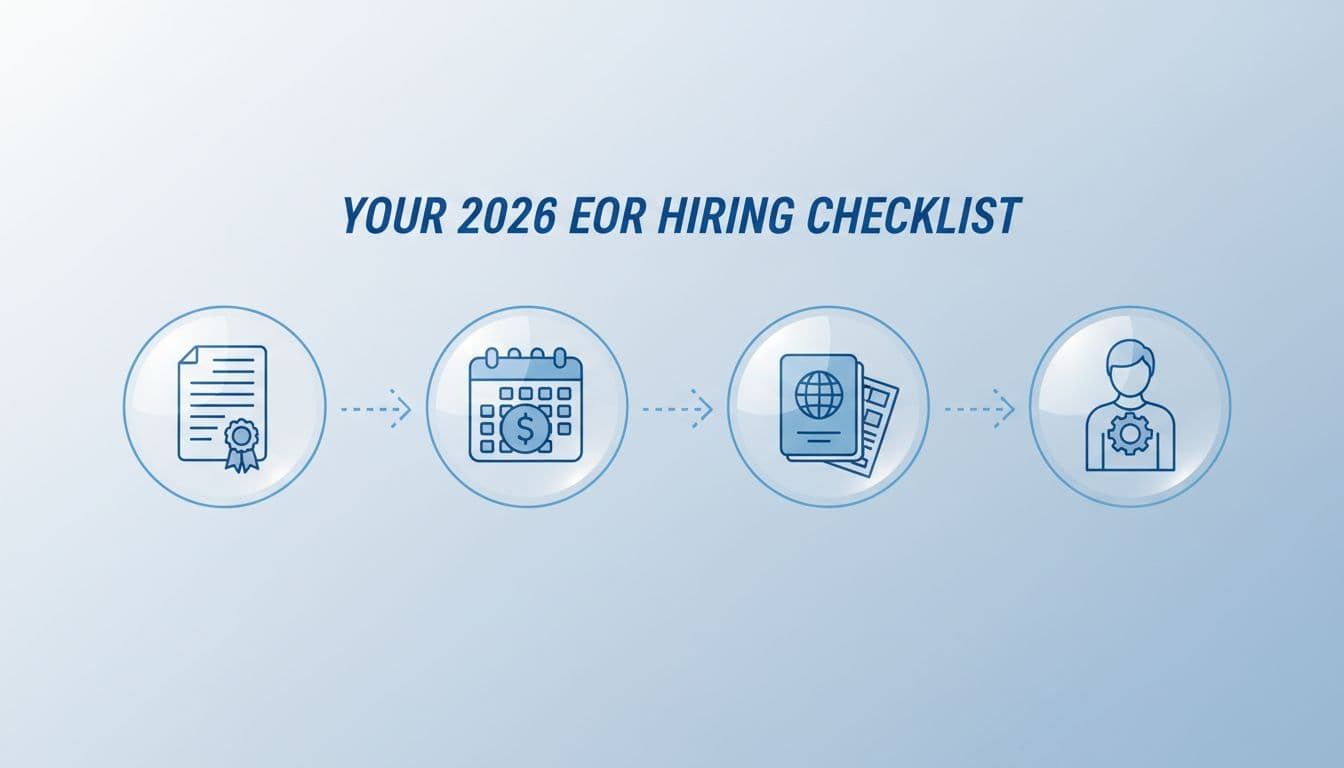
Your 2026 Tanzania EOR hiring checklist
If you want a working checklist rather than theory, use this order.
- Confirm the role and the worker type. Decide whether this person should be an employee or a contractor. If you control their schedule, tools, and output closely, an employment setup may be safer.
- Check whether the hire is a local national or a foreign national. Local hires are simpler. Foreign workers may need permit support, and that changes both timing and paperwork.
- Match the salary to the right sector. Don’t assume one minimum wage covers all roles. In Tanzania, the sector determines the floor, so the job category must be right before the offer goes out.
- Build the compensation package with payroll add-ons in mind. Gross salary is only the starting point. PAYE, NSSF, SDL, workers’ compensation, and benefits all shape the real monthly cost.
- Prepare a country-specific contract. The agreement should reflect local requirements on pay, hours, leave, location, and start date. A Tanzania hiring guide is useful for a quick check, but your EOR should supply the actual local template.
- Map the onboarding documents early. IDs, tax details, bank information, and signed contract papers are the usual basics. Delays often come from missing documents, not from the EOR itself.
- Set up payroll approval and payment timing. You need a clean process for salary approval, variable pay, reimbursements, and leave tracking before the first payroll run. If the role starts mid-month, confirm how the first payslip will be prorated.
- Review statutory leave and working time rules with your managers. Your team should know the 45-hour weekly limit, overtime rules, annual leave expectations, and any local public holiday impact. A manager in London or New York can create compliance problems in Dar es Salaam without meaning to.
- Plan the exit process before the start date. That sounds backward, but it saves trouble later. Written notice, final pay, and local termination steps should be clear in your internal process from day one.
- Ask the provider how they handle disputes and updates. Laws change. Wage orders change. Internal policies drift. Your EOR should monitor those shifts and update contract language and payroll settings without waiting for you to spot the issue first.
This is where provider quality starts to show. A weak EOR only gets people onboarded. A good one keeps the employment relationship compliant after the welcome email fades.
Costs, timing, and when an EOR beats entity setup
The biggest reason companies choose an employer of record in Tanzania is simple: it saves time and avoids fixed overhead before the market proves itself.

Current 2026 summaries put EOR hiring in the 5 to 10 business day range when documents are ready. Some providers quote one to three weeks. By contrast, setting up a local entity usually takes months once incorporation, payroll setup, banking, and ongoing filings are included.
This quick table shows the trade-off.
| Factor | EOR in Tanzania | Local entity in Tanzania |
|---|---|---|
| First hire timeline | Often 5 to 10 business days | Often several months |
| Upfront setup | Low, mostly provider onboarding | Higher, with registration and local setup work |
| Ongoing admin | Managed by provider | Managed by your in-house team and local vendors |
| Best fit | Market testing, small teams, contractor conversions | Long-term larger local operation |
For startups and first hires, the EOR model usually wins. You get predictable monthly costs instead of a stack of one-off legal and admin bills. You also avoid building payroll and compliance capacity for a team that may still be small six months from now.
Expandbase is relevant here because its published approach is built around that speed-to-hire case. The company says it can cut HR admin, reduce the cost tied to entity setup, and move from hire request to onboarding and local payroll activation within days when documents are ready. For a remote team testing Tanzania with one employee, that model makes more sense than opening a company too early.
How to choose the right Tanzania EOR partner
Not every provider will fit your risk profile. Some are fine for basic payroll. Others are better when you need help with contracts, work permits, benefits, and employee support.
A strong provider should answer a few questions clearly. Do they have updated contract templates that reflect the 2025 labor law changes and the 2026 wage order? Can they handle payroll filings with the TRA and NSSF without third-party confusion? Will they support you if a dispute reaches the Commission for Mediation and Arbitration? Those are practical tests, not sales questions.
You should also look at the service model. If you want a low-touch tool, one provider may be enough. If you want someone to guide onboarding, explain local norms, and catch risks before payroll day, choose differently. This is where Expandbase deserves a place on the shortlist. Its public materials stress hands-on onboarding, transparent pricing, local-currency payroll, benefits administration, expenses, and audit-ready reporting. It also says clients are not locked into long, painful vendor arrangements, which matters when you’re still testing a market.
Use this quick filter when comparing options:
- Ask how they classify sector wages for your exact role.
- Ask which statutory contributions they file each month.
- Ask whether they support foreign worker permits if needed.
- Ask what offboarding fees or notice-related charges can appear later.
- Ask who answers your questions, a local expert or a generic support queue.
If a provider can’t answer those points plainly, keep looking. A Tanzania EOR should make the job easier, not hide the hard parts behind vague promises.
Final thoughts
Hiring in Tanzania can move fast, but only if the basics are right. The most important one is simple: align the role, contract, pay, and payroll setup with local law before the employee starts.
A solid EOR gives you that structure without the weight of a new entity. For startups, remote teams, and companies testing East Africa, that’s usually the smarter first move.
One hire can open a market. Compliance is what keeps that door open.