
Hiring in Uganda can move fast until payroll, contracts, and local labor rules land on your desk. That is where a Uganda employer of record becomes useful, especially if you want to hire now and decide on a local entity later.
You keep control of the role, the goals, and the day-to-day work. The EOR handles the local employment layer so your first hire in Kampala, or your first small team, does not turn into a legal and admin project. Start with the reason companies choose this route in the first place.
Why more companies are hiring in Uganda through an EOR
Many companies do not enter Uganda with a full office plan. They start with one sales rep, a research lead, a customer support hire, or a contractor they now want to convert into an employee. That is a sensible way to test demand, but it creates a problem. You need lawful employment before you have local infrastructure.
An employer of record solves that gap. Instead of opening a Ugandan company first, you hire through a provider with local legal and payroll capacity. That means you can move on real business timing, not incorporation timing.

This model fits remote-first startups, investor-backed scale-ups, and larger companies testing a new market with low risk. It also helps when Uganda is only one stop in a wider expansion plan. A team that hires in two or three countries quickly needs one operating model, not three sets of local workarounds.
There is also a cost angle. Building a legal entity for a single hire rarely makes sense. You would still need payroll administration, tax handling, employment documents, and local records. An EOR shifts that work to a provider that already has the setup in place.
Expandbase is one option for companies that want this model. It supports hiring in more than 150 countries and focuses on guided onboarding, payroll, contracts, and compliance in one workflow. For teams that want speed without losing control, that kind of setup is often the whole point.
What a Uganda employer of record actually does
An EOR is the local legal employer. Your business is still the operational employer in practice. You pick the candidate, set compensation, assign the work, and manage performance. The provider handles the parts that usually require a local company.
This split is easier to understand side by side.
| Area | Your company | EOR | | | — | — | | Hiring decision | Chooses the candidate, role, pay, and start date | Confirms local hiring setup can support the role | | Employment contract | Approves business terms and job scope | Issues locally aligned contract and onboarding documents | | Payroll | Approves pay changes and variable pay | Runs payroll, deductions, payslips, and filings | | Compliance records | Manages policies and daily management | Keeps employment records and local admin in order |
That means a Uganda employer of record is not a recruiter, and it is not a staffing agency in the usual sense. It is an employment operator. The provider becomes the employer on paper, while you stay in charge of the employee’s output and place on your team.
A good EOR will also do more than send monthly invoices. It should support compliant onboarding, right-to-work and eligibility checks, statutory deductions, local leave handling, benefits setup where relevant, and offboarding when the employment ends. If the provider cannot explain who owns each task, problems usually show up later.
This is where hands-on support matters. Some EOR tools are mostly self-serve. Others guide the process from contract generation to first payroll. Expandbase positions itself in that second group. Its process is built around quick onboarding, clear pricing, and less manual admin, which matters if your HR team is small and already stretched.
Uganda employment rules that matter before day one
Before you hire, get one point clear. Uganda still does not have a practical, modern national minimum wage that employers can use as a real benchmark in May 2026. The old figure on the books is outdated and not used in formal hiring, and recent employment law updates in Uganda show that the debate is still active.
The lack of a working national minimum wage does not reduce employer risk. It puts more weight on market-based pay decisions and clear contract terms.
So, salary setting needs care. Most employers rely on market rates, sector norms, and the written contract. If you guess low because there is no modern wage floor, you invite retention problems and possible disputes.
Written terms matter for another reason. Uganda recognizes contracts of service under the law, but probation rules are far more precise. The ILO country detail for Uganda notes that a probationary contract must be in writing, can last up to six months, and may be extended once for up to six more months with the employee’s consent. During probation, either side can end the contract with at least 14 days’ notice.

Termination rules continue after probation. The Employment Act of Uganda sets out notice and wage protection rules, so you should not treat termination as a simple manager decision. This is one reason EORs are useful. They keep the legal paperwork in line with local requirements while you handle the business case.
The law also changed in 2025 in ways foreign employers should not ignore. Domestic workers gained clearer recognition and protection. Rules around recruitment for migrant workers tightened. Breastfeeding employees received stronger support rights. Casual workers who stay in continuous work for more than six months may need conversion into formal employment. If you planned to “start casual and sort it out later,” that approach is much riskier now.
Payroll, PAYE, and NSSF can trip up first-time employers
A compliant hire is not complete when the contract is signed. Payroll is where mistakes become visible, and sometimes expensive. In Uganda, employers need to withhold and remit PAYE, manage social security obligations, and keep records that can stand up to a future check.
That sounds simple until the monthly cycle starts. Payroll has to match the contract, approved changes, leave data, deductions, and local deadlines. According to this overview of payroll and benefits in Uganda, NSSF remittances are due by the 15th day of the month after payroll. Missing deadlines can lead to penalties and extra admin.
PAYE works the same way in principle. The employer must calculate it correctly, withhold it, and send it to the Uganda Revenue Authority. This guide to employment taxes in Uganda gives a useful summary of the employer’s role in both PAYE and social contributions.
For an overseas company, the challenge is not only tax math. It is building a repeatable process. You need local-currency payroll, timely payslips, audit-ready records, and a clean approval flow for changes. If you are hiring one employee today and five more across Africa next quarter, manual payroll becomes a weak point fast.
That is why many teams use an EOR even when they understand the law. The provider already has the payroll rails. Expandbase, for example, packages payroll, deductions, payslips, and records into one operating flow, with the broader goal of cutting manual HR and finance work. If your internal team wants fewer spreadsheets and fewer month-end surprises, that structure helps.
How onboarding usually works with an EOR in Uganda
A well-run EOR process should feel guided, not chaotic. You should not need three email chains, a local lawyer, and a last-minute payroll scramble to start one employee. In practice, the workflow is usually short and predictable.
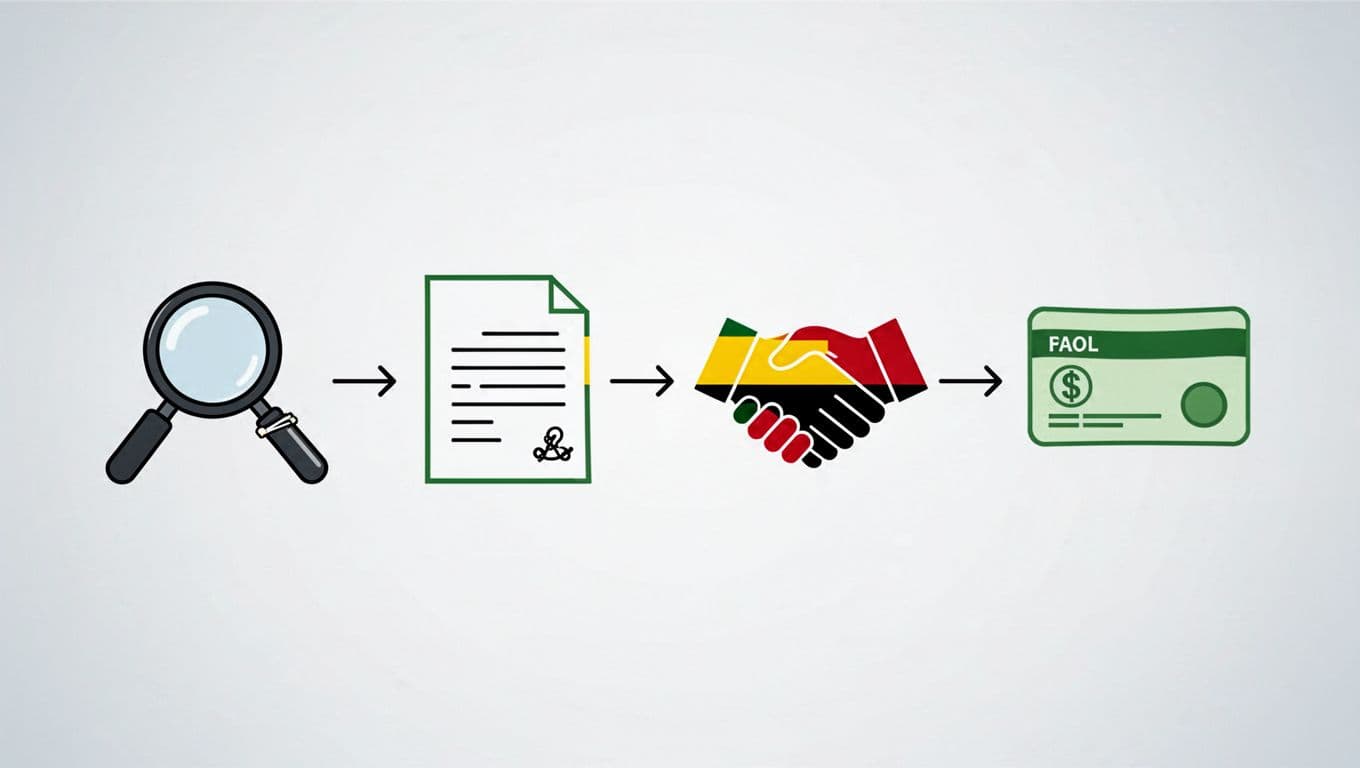
Most providers follow a sequence like this:
- You submit the basic hire details, such as role, pay, country, and start date.
- The EOR checks local eligibility and prepares a contract that fits Ugandan rules.
- The employee uploads ID and tax documents through a secure onboarding flow and signs digitally.
- Payroll, benefits, and internal admin records are set up before the start date.
- First payroll runs in local currency, with deductions and payslips handled by the provider.
That sequence matters because problems often start before day one. A contract might use the wrong notice terms. A probation clause might be vague. The employee’s documents may sit in email, with no proper record trail. A decent EOR closes those gaps early.
Expandbase’s own process follows this general model. It frames hiring as a short request-and-onboard cycle, with payroll activated soon after onboarding rather than weeks later. That is attractive for startups and scale-ups because the team does not have to build local HR operations from scratch.
There is also a softer benefit. Guided onboarding is easier on the new employee. They get clear documents, digital signing, and a payroll setup that feels organized from the start. When a company is entering a new country, that first impression matters more than most leaders expect.
When an EOR makes more sense than opening a Ugandan entity
Opening your own company in Uganda can be the right move. It is not always the first move. If you are testing a market, hiring a temporary project team, or placing one person on the ground, an EOR is usually the cleaner option.
The math explains why. Setting up and maintaining a local entity often takes one to four months, costs thousands each year, and burns a surprising amount of internal time on registration, payroll coordination, accounting, and compliance admin. Expandbase’s published benchmarks put that admin burden in stark terms, including dozens to hundreds of hours of paperwork that many small teams cannot spare.
An EOR works best when speed matters more than local infrastructure. That includes remote-first startups, companies converting long-term contractors into employees, and established firms that want to validate revenue before committing to an office. You can hire legally, run payroll, and learn the market first. Then, if Uganda becomes a long-term anchor market, you can revisit entity formation later.
The balance shifts when you plan a large permanent team, want direct local invoicing, or need a deeper in-country footprint for tax or commercial reasons. In those cases, your own entity may become worth the effort.
If Uganda is one part of a wider Africa rollout, the same decision tends to repeat across markets. This Ghana employer of record guide shows how similar the early tradeoff can look in another fast-growing hiring destination. Most companies do not need a different operating model for every country. They need one model that works until scale clearly justifies something else.
What to look for in a provider, and where Expandbase fits
Provider choice matters because EORs are not all built the same way. Some sell software first and support second. Others do the local work with more guidance. Uganda is not the place to discover that your provider only helps after an issue appears.
A strong provider should cover a few basics without excuses:
- Contracts should match Ugandan labor rules and the actual role you are hiring for.
- Payroll should include PAYE, social contributions, payslips, and local recordkeeping.
- Pricing should be clear, including onboarding, offboarding, and change requests.
- Support should be available when probation, leave, or termination questions come up.
- Multi-country coverage helps if Uganda is the first hire, not the last.
Expandbase is one solution worth reviewing in that context. It supports hiring in 150-plus countries and puts a lot of emphasis on guided onboarding, transparent pricing, audit-ready records, and less admin burden for internal teams. Based on its own published figures, clients may cut HR overhead by as much as 40 percent and avoid much of the cost tied to opening entities in each new market. It also promotes faster onboarding, automated payroll processing, benefits administration, and no vendor lock-in, which are practical advantages for companies expanding in stages.
Still, compare it against alternatives and ask blunt questions. Who drafts the Uganda contract? Who owns payroll corrections? How are offboarding fees handled? What happens if your contractor needs to convert to employee status next month? If a provider dodges those questions, keep looking.
Those checks also matter when your hiring plan expands beyond East Africa. The same framework appears in this Egypt EOR hiring guide, because fast international hiring only works when contracts, payroll, and compliance stay aligned across countries.
Conclusion
Hiring in Uganda does not need to start with a company registration project. For many startups, scale-ups, and global teams, an EOR is the practical way to hire legally, pay correctly, and keep risk under control while the market is still being tested.
The key is not speed alone. It is getting the contract, probation terms, payroll, and local compliance right from day one. If your next hire in Uganda needs to happen soon, choose a provider that can handle that full employment layer with clear support and no guesswork.