
Hiring in Ghana can move fast, until paperwork slows the whole plan. If you want a sales hire, a small product team, or a market-entry lead on the ground, a Ghana employer of record can remove the need to open a local entity first.
That matters in 2026 because the rules still touch contracts, payroll, tax, immigration, and exit terms. Miss one piece and a simple hire turns into a delay. Start with the checklist below, then build from there.
Why a Ghana employer of record makes sense in 2026
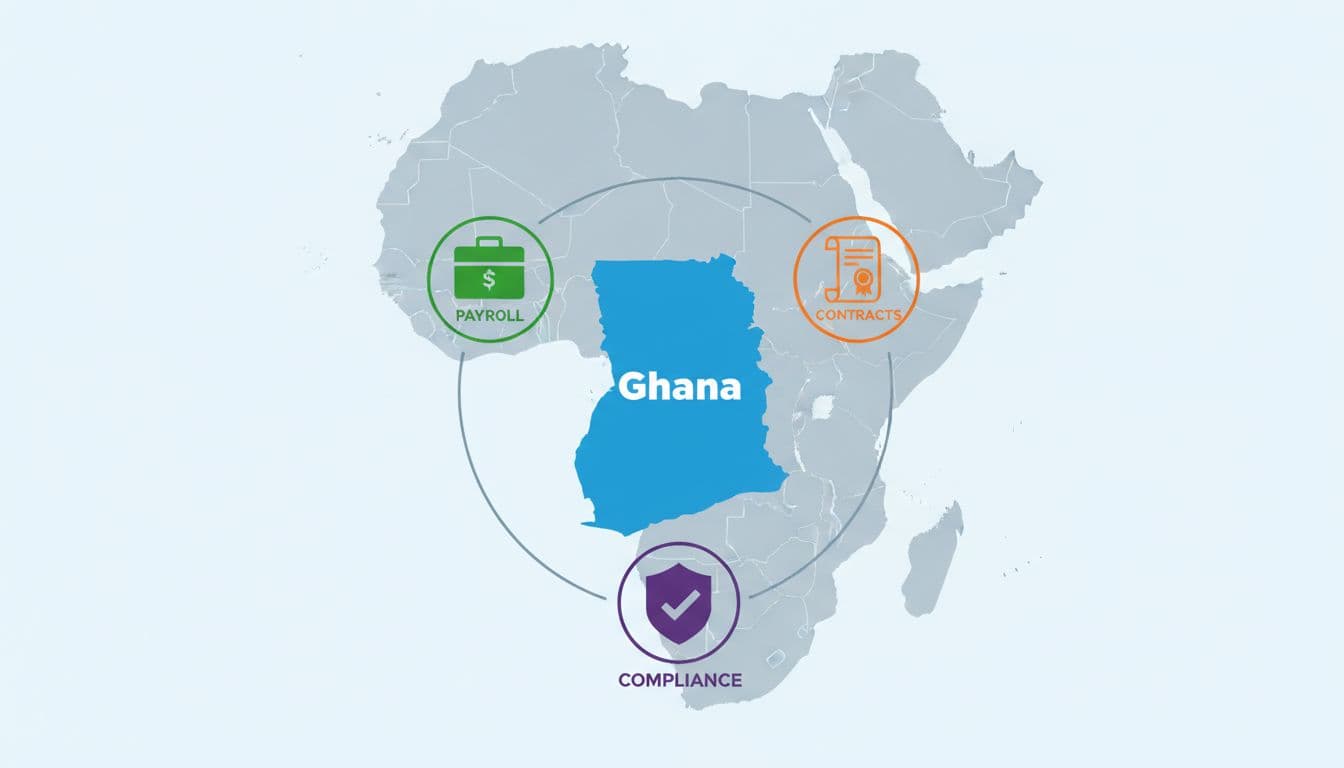
A Ghana employer of record, or EOR, becomes the legal employer in-country while your company manages the person’s day-to-day work. In plain terms, you get local hiring infrastructure without setting up a Ghanaian company first.
For startups and scale-ups, that’s often the cleanest route. Opening an entity can take weeks or months. It also brings accounting, payroll registration, local filings, and ongoing admin. If you’re testing a market with one or two hires, that’s a lot of weight for a light launch.
This is why EORs appeal to remote-first teams. The right provider handles compliant contracts, onboarding, payroll in local currency, tax filings, and audit-ready records. Expandbase is one option. It supports hiring in 150+ countries and focuses on guided onboarding, clear pricing, and less manual HR work. That setup works well if Ghana is your first hire now, but not your last country.
Key legal points to lock down before hiring in Ghana
Before you issue an offer, pin down the basics below.
| Area | 2026 point | What it means for employers |
|---|---|---|
| Minimum wage | GH¢21.77 per day, effective Jan. 1, 2026 | Base pay can’t fall below the legal floor |
| Contract language | Employment terms should be in English | Spell out role, pay, hours, leave, benefits, and allowances |
| Foreign hires | Work permit must be approved through Ghana Immigration Service | Apply before arrival, and tie the permit to the exact employer and role |
| Termination | Notice depends on service length | Longer service usually means more notice or pay in lieu |
Those are the headline items, but the detail matters. Contracts should cover duties, start date, salary, overtime, leave, bonuses, and other agreed terms. If you hire a foreign national, the permit is not a formality. Ghana expects sponsorship before the person starts work, and late or missing approvals can trigger fines.
For expatriate hires, immigration timing often decides the real start date, not the signed offer letter.
Termination needs care too. A worker with three or more years of service usually gets one month’s written notice or pay in lieu. Under three years, two weeks is common. If you end a foreign employee’s role, you also need to notify immigration quickly. For a broader summary of contract and dismissal rules, this Ghana employment law guide is a useful cross-check.
Payroll is another place teams slip. Besides salary, employers need to handle PAYE and local social security duties correctly. This Ghana payroll tax guide for 2026 gives a helpful snapshot, and this Ghana EOR overview outlines common payroll tasks that EOR providers usually manage.
Ghana employer of record 2026 hiring checklist
Once the legal frame is clear, the hiring flow gets much easier.

- Define the role before you choose the hiring model. If the person will work under your direction, on your schedule, and as part of your team, an employee setup usually fits better than a contractor deal.
- Set pay and benefits early. Confirm salary, bonus rules, leave, start date, and whether you’ll offer extra perks beyond the legal floor. Also agree on how payroll will run, usually monthly, in local currency.
- Prepare a Ghana-ready contract in English. Don’t recycle a US or UK template. Local rules on notice, hours, leave, and allowances need to show up in the written terms.
- Check right-to-work status. Local hires need identity and tax documents. Foreign hires need a work permit, and often a residence process, before work begins. Renewals matter too, because permits are employer-specific.
- Build onboarding around documents, not email chains. Collect IDs, bank details, tax data, and signed agreements in one flow. This is where an EOR saves time. Some providers, including Expandbase, structure this as day 1 hire request, day 2 digital onboarding, then first-payroll setup in the first week.
- Get payroll ready before day one. That means taxes, benefits, deductions, payslips, and approval steps. Expandbase, for example, focuses on local-currency payroll, automated payslips, and synced HR and finance records, which helps lean teams avoid manual rework.
- Plan the exit before the start. It sounds odd, but it prevents problems later. Write notice rules, probation terms, confidentiality, equipment return, and offboarding steps into the process from the start.
If you’re converting a contractor to an employee, start fresh. A contractor agreement won’t cover the employment points Ghana expects.
What to look for in an EOR partner for Ghana
Not all EOR providers feel the same once the contract is signed. Some hand you software and leave you alone. Others guide the hire, explain local rules, and keep payroll clean month after month.
Look for four things. Pricing should be clear, with no surprise fees for onboarding, offboarding, or payroll changes. The provider should support contracts, payroll, benefits, and compliance in one place. Ask how they handle foreign permits if you may relocate staff into Ghana. Also check contract length and exit fees, because vendor lock-in is a common complaint.
Expandbase fits this shortlist well for companies hiring beyond one market. It combines guided support with payroll, benefits, expense controls, and country-level compliance across 150+ countries. That’s useful when Ghana is part of a wider Africa or global hiring plan, not a one-off experiment.
Ghana isn’t hard to hire in, but it doesn’t forgive shortcuts. The safest route is simple: get the contract right, treat payroll as a local process, and handle immigration early when foreign staff are involved.
If speed matters, a Ghana employer of record gives you a lower-risk way to hire now and decide on an entity later. That’s often the smartest move when you’re still proving the market.