
Expanding into Guatemala can look easy on paper. Then the first contract, payroll cycle, and labor filing show up.
For most foreign companies, a Guatemala employer of record is the faster and lower-risk path. You can hire local employees without opening your own entity first, which matters when you’re testing a market or filling one key role fast.
Why Guatemala is worth a look in 2026
Guatemala keeps showing up on nearshore hiring lists for a reason. It offers time-zone overlap with North America, a large Spanish-speaking workforce, and practical roles for sales, support, operations, and market-entry teams.
The catch is legal setup. Foreign companies generally can’t employ workers in Guatemala directly unless they have a local entity or use an Employer of Record. That makes your first hiring decision less about talent and more about structure.
Opening a local company can take months and adds accounting, payroll, registration, and compliance work from day one. For a startup or scale-up hiring one or two people, that’s a heavy lift. An EOR gives you a local employer framework right away, so you can move without carrying all that admin yourself.

How a Guatemala employer of record works
An EOR becomes the legal employer in Guatemala. Your company still picks the candidate, sets pay, and manages daily work. The EOR handles the local employment layer, including contracts, payroll, tax deductions, statutory filings, and core compliance tasks.
That setup is useful when speed matters. It also helps when you’re converting a contractor into an employee, because worker classification mistakes can get expensive.
Expandbase is one option built for this model. Its published approach focuses on guided onboarding, country-specific contracts, local payroll, benefits admin, and audit-ready records across 150+ countries. The company also positions its service as a way to cut a large share of HR admin and avoid much of the cost tied to entity formation.
In Guatemala, fast hiring only works when the local paperwork is right from day one.
Your 2026 checklist for hiring in Guatemala
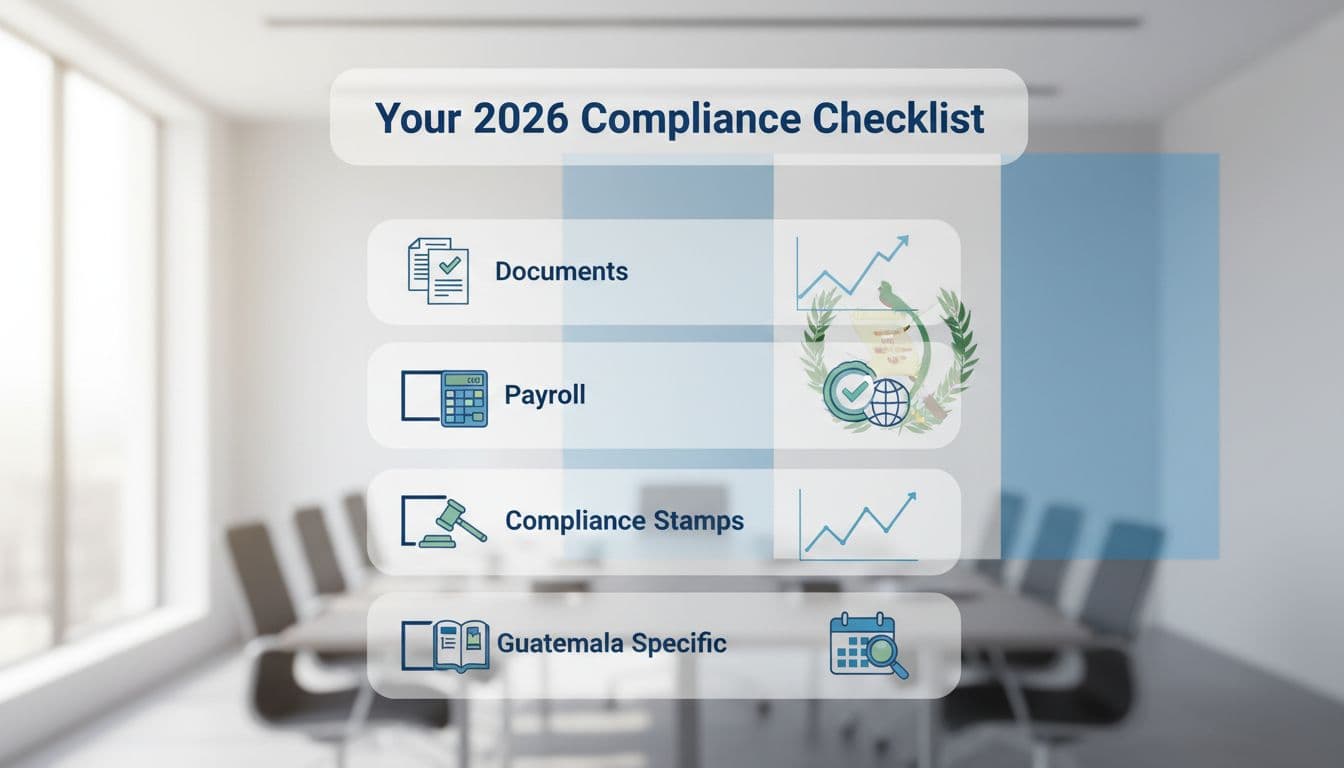
Before you send an offer, lock down the basics below.
This quick table shows the main points to verify:
| Area | What to check in Guatemala |
|---|---|
| Hiring route | Use an entity or EOR, foreign firms usually can’t hire directly |
| Contract | Written contract in Spanish, with pay and role details |
| Payroll | Biweekly is common, with taxes and social security handled locally |
| Hours | Standard schedules often fall between 44 and 48 hours weekly |
| Leave | 15 paid vacation days after one year, if service rules are met |
| Foreign hires | Work permit, residency, and local workforce ratio rules apply |
The broad picture is simple. The details are where companies slip.
- First, confirm the worker should be an employee. If the person follows your schedule, uses your systems, and works like part of the team, a contractor label may not hold up. That point matters for remote-first companies that want to convert long-term contractors. Papaya Global’s Guatemala hiring overview is a useful cross-check on this issue.
- Next, prepare a local contract in Spanish. Include the role, pay, hours, work location, and contract type. Current country summaries also point to a typical two-month probation period. Since Guatemalan labor protections can’t be waived by private agreement, contract shortcuts are a bad bet.
- Then set up payroll correctly. Recent market guides, including Rivermate’s Guatemala guide, note that biweekly payroll is common for most employees, while some management roles may run monthly. Your EOR should also manage local tax withholding, social security registration through IGSS, and payslips in local currency.
- Also check hours, leave, and overtime before you price the role. Depending on the schedule and sector, standard working time usually lands around 44 to 48 hours per week. Employees generally earn 15 paid vacation days after one year if they have worked enough days during that period. Budgeting only the base salary is like pricing a flight without baggage fees. It looks fine until the total lands.
- If you’re hiring a foreign national in Guatemala, review the April 2026 rules carefully. Governmental Agreement 178-2025 updated the work permit process. The local employer applies, the permit is tied to one employer, and it usually lasts one year. Employers also need supporting registrations, and there is a long-standing rule that at least 90% of the workforce should be Guatemalan, with foreign workers usually limited to technical or management roles. A training contribution of Q3,000 may apply per foreign hire.
- Finally, plan for offboarding before day one. Notice periods, final pay, and recordkeeping matter in Guatemala. A good EOR helps with that process too, not only the welcome email.
What to look for in an EOR partner
Some EORs give you software and little guidance. Others help you through the parts that tend to cause trouble, contracts, onboarding, payroll cutoffs, benefits, and exits.
Look for clear pricing first. Hidden fees around onboarding, benefits, or offboarding can erase the value of using an EOR. Also ask who owns tax filings, social security handling, contract updates, and foreign worker paperwork when needed.
Expandbase is worth considering if you want guided support instead of a do-it-yourself platform. Its published service includes local contract generation, digital onboarding, payroll in local currency, benefit support, and records built for audits. It also highlights transparent pricing and no vendor lock-in, which matters when Guatemala is one stop in a wider expansion plan.
If you’re comparing Central American markets, Expandbase’s Panama employer of record 2026 guide and Dominican Republic EOR guide help show how quickly labor rules change across the region.
Guatemala can be a smart first hire, but only when local compliance is in place before the employee starts. Contracts, payroll, social security, and foreign worker rules all need the same attention.
For startups, scale-ups, and remote teams, an EOR is often the cleanest way to hire now and decide on entity setup later. That keeps momentum on your side without turning one new hire into a legal project.