
Hiring in Greece can feel like buying a great apartment in Athens, then realizing the paperwork is a second full-time job. The talent is there, the time zone works for Europe, and the market matters. Still, compliance details can slow you down fast.
A Greece employer of record (EOR) is the shortcut when you want to hire quickly without opening a local entity. In this guide, you’ll get a practical 2026 checklist, plus the Greece-specific rules that tend to trip teams up, from contract timelines to payroll quirks like 14 salary payments.
Why a Greece employer of record can be the safest “fast” option
An Employer of Record hires your team member through its local legal entity, then assigns the employee to work for you day-to-day. You manage the work, goals, and performance. The EOR handles the employment admin that creates risk, payroll, tax filings, statutory benefits, and required reporting.
For startups and scale-ups, the biggest win is speed with fewer permanent commitments. Instead of spending months setting up a Greek entity, you can hire in days, then decide later if Greece deserves a full entity.
This quick comparison helps frame the decision:
| Topic | Set up your own Greek entity | Use an EOR in Greece |
|---|---|---|
| Typical launch time | 1 to 4 months | Days (often within a week or two) |
| Ongoing admin workload | High, multiple vendors | Lower, one provider |
| Typical annual costs to maintain | $2K to $20K+ | Subscription-style EOR fees |
| Risk of missing filings | Higher without local experts | Lower with local compliance coverage |
For a lot of teams, the table isn’t about cost alone. It’s about not getting stuck waiting on registrations, bank processes, and recurring filings while your hiring plan slips.
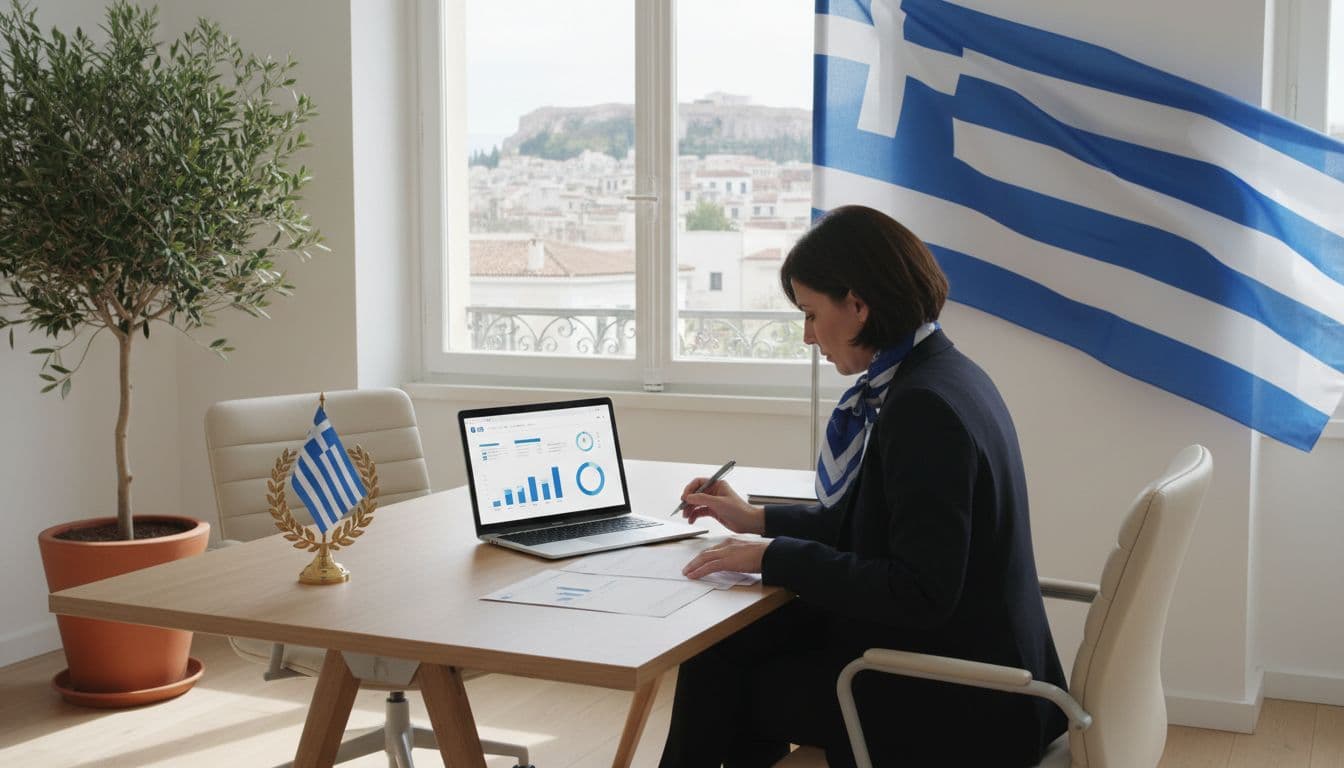
Quick reality check: if you need someone working next month, entity setup is rarely the right first move. An EOR keeps the hire legal while you test traction.
Greece hiring rules to plan for in 2026 (contracts, hours, payroll, reporting)
Greece has made several labor compliance updates across 2025 and into 2026, with clearer rules around working time, reporting, and digital compliance tools. For most foreign employers, the challenge isn’t “what’s allowed,” it’s remembering what must be documented, when it must be filed, and in which system.
Contracts and written terms. Greece expects written employment terms that cover basics like role, pay, working hours, leave, and notice. In practice, you should treat this as a day-one requirement, even if some details can be delivered within the legal window (commonly referenced as within two months). An EOR typically provides country-ready contract templates and ensures the right clauses are in place.
Pre-hire reporting. New hires generally need to be declared before work starts via Greece’s digital employment reporting system (commonly referred to as Ergani, now Ergani II). This is one of those “do it before day one” obligations that teams miss when they hire directly without local support.
Working hours and overtime. The standard workweek is commonly 40 hours. Overtime rules and caps matter, especially for customer support, sales teams, and project-based roles. Recent updates expanded overtime flexibility (including higher daily overtime allowances and specific conditions for longer workdays with consent), but reporting and pay premiums still apply. Don’t treat “flexible” as “untracked.”
Payroll structure and social security. Greece is known for 14 salary payments per year (including holiday bonuses). Employers also contribute to social security, with an employer rate often cited around 21.79%. Payroll reporting typically includes monthly declarations to the social security authority (e-EFKA). These numbers change by employee profile and setup, so confirm with your provider before finalizing offers.
Pay transparency deadline. By June 7, 2026, pay transparency rules connected to EU requirements start to bite harder. The direction is clear: less pay secrecy, more structured pay information, and, for larger employers, pay gap reporting on defined schedules.
For a country snapshot and recent notes, compare guidance from an EOR hiring guide like Playroll’s Greece EOR updates, then verify your exact scenario with your provider.
Your 2026 checklist for hiring in Greece with an EOR (end-to-end)
The cleanest way to think about EOR hiring is a relay race. You own the recruiting, role design, and management. The EOR carries the legal and payroll baton without dropping it.
Use this 2026 checklist to keep your Greece hire on track.
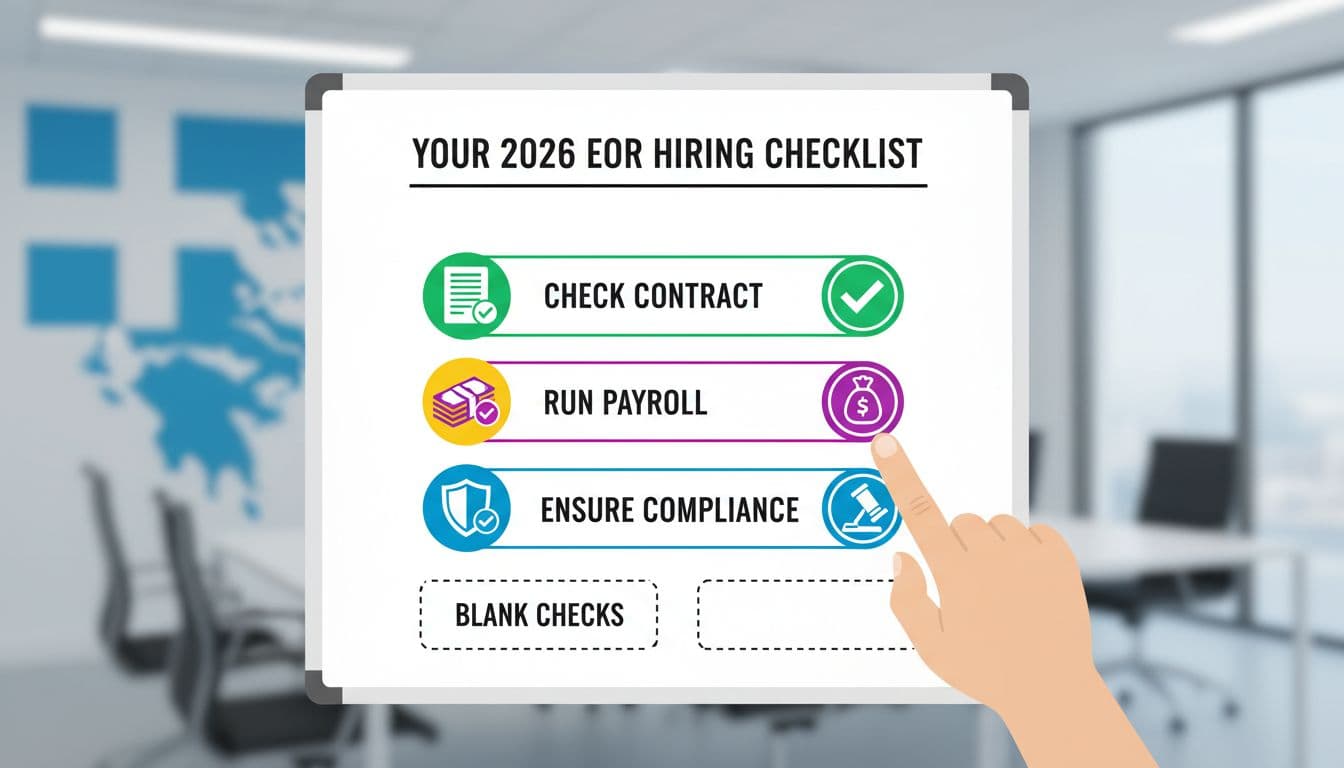
- Confirm the worker type early (employee vs contractor).
Misclassification creates fines and back payments. If you control hours, tools, and ongoing work, you’re usually describing an employee. - Validate right-to-work status before you pick a start date.
EU nationals are simpler. Non-EU hires may need residence and work authorization. Build time for permits if needed. - Lock compensation with Greece payroll realities in mind.
Ask your EOR to model total cost with employer social contributions and the 14-payment structure. A salary that looks fine on paper can surprise finance later. - Set working hours expectations and overtime rules in writing.
Greece allows overtime within caps and with premium pay. If you expect occasional long days, define how requests and approvals will work. - Generate a Greece-compliant employment contract.
Ensure job title, pay, hours, leave, notice, and any probation details are correct. Then use e-sign where available. - Complete pre-hire reporting in Ergani II.
Your EOR should file this before the first working day. Treat this as a hard gate, not an “after onboarding” task. - Collect onboarding documents securely.
IDs, tax details, and social security identifiers matter for first payroll. Make sure access is limited and auditable. - Run first payroll in local currency and confirm payslip format.
Your EOR should calculate statutory deductions, process payments, and issue payslips on time. Align payday expectations with your internal finance cycle. - Set up benefits and any agreed allowances.
Benefits can be statutory, customary, or company-driven. Make sure the offer letter and payroll treatment match. - Plan for 2026 pay transparency and internal leveling.
Even smaller companies feel pressure from candidates and investors to explain pay ranges. Build simple salary bands now, before hiring scales.
If you want extra context on how EOR hiring is typically structured in Greece, this overview is useful for cross-checking assumptions: EOR Overview’s guide to hiring in Greece.
Choosing an EOR partner for Greece: what to ask, and why Expandbase fits
Not all EORs feel the same once you’re in month three and a policy changes. A good Greece employer of record should be clear on pricing, quick with contract updates, and practical about what’s required versus “nice to have.”
Here’s what to ask on calls:
- How do you price payroll, FX, and offboarding? Hidden add-ons cause budget whiplash.
- Who owns compliance monitoring in Greece? You want documented updates, not vague reassurance.
- How fast can you onboard, and what blocks day one? Pre-hire reporting and IDs are common blockers.
- Can you support benefits and expenses without extra tools? Fewer systems reduce mistakes.
Expandbase is a strong option here because it’s built for fast global hiring without extra noise. It supports hiring across 150+ countries, helps companies skip local entity setup, and focuses on the core work that matters: compliant contracts, digital onboarding, local payroll, and audit-ready records. The model is also designed to reduce HR overhead (often cited up to 40%) and avoid the cost of building and maintaining a local entity (often far more expensive than teams expect).
For a broader comparison of EOR options operating in Greece, you can also scan a neutral-style roundup like Borderless’s EOR services in Greece, then shortlist providers based on your support needs and timelines.
Conclusion
Hiring in Greece in 2026 is very doable, but it rewards teams that treat compliance like product quality, not an afterthought. A Greece employer of record lets you move quickly while still handling contracts, reporting, payroll, and local rules the right way. Start with the checklist above, pressure-test the 14-payment payroll setup, and confirm pre-hire reporting before day one. Once the first hire goes smoothly, scaling in Greece becomes a repeatable process, not a new fire drill each time.