
Hiring in Georgia got more sensitive in 2026. You can still move fast, but one missed permit or filing can slow a hire before day one.
That is why a Georgia employer of record matters more now. If you are testing the market, hiring a remote employee in Tbilisi, or converting a contractor into an employee, an EOR can take on the local employer duties while your team stays focused on the role itself.
The value is simple: less setup, lower risk, and a cleaner path to compliant hiring.
Why a Georgia employer of record makes sense now
Georgia is often a first stop for startups and scale-ups that want a foothold in the region without opening a full entity. That makes sense. A single sales rep, recruiter, or product specialist rarely justifies months of setup work.
Opening a local company for one hire is a lot like renting an entire office for one desk. The fixed cost shows up long before the return does.
A Georgia employer of record solves that problem. The EOR becomes the legal employer in Georgia, while you direct the person’s work, goals, and performance. As a result, you can hire without building local payroll, contract, tax, and compliance systems from scratch.

This model also helps with speed. Good EOR providers issue local contracts, collect onboarding documents, run payroll in local currency, and keep audit-ready records in one place. That matters when your finance and people teams are small.
Expandbase is one option for companies that want guided support instead of a do-it-yourself platform. It supports hiring in 150+ countries, handles locally compliant contracts, multi-currency payroll, benefits, and expense management, and helps companies avoid the cost and delay of setting up a Georgian entity too early. For fast-growing teams, that can remove a big share of the weekly admin load.
You can see similar hiring models in Playroll’s Georgia hiring guide, which also reflects how EORs are used to enter Georgia without forming a local company first.
The 2026 Georgia rules that matter most
The biggest 2026 change is the new Right to Work permit for many foreign workers in Georgia. Since March 1, 2026, foreign nationals without permanent residence generally need this permit before starting paid work or business activity in the country.
If your hire is a foreign national in Georgia, permit timing now matters as much as the offer letter.
The rule reaches beyond standard employees. It can also affect self-employed people, freelancers, and paid consultants working in Georgia. Permanent residents are usually exempt. Founders or shareholders who do not work as employees in the company are also treated differently.
For employers, the key steps are stricter than before:
| Compliance point | What matters in 2026 | How an EOR helps |
|---|---|---|
| Job posting | Employers must post the role on worknet.ge for 10 working days | The EOR handles the posting and saves the proof |
| Work permit | The permit is tied to one job and one employer, and processing can take 10 to 30 days | The EOR prepares the filing and tracks the case |
| Fines and reporting | Missing permits can lead to GEL 2,000 to 6,000 penalties, and changes must be reported | The EOR manages dates, updates, and records |
There is some transition relief for certain workers who were already active when the rule took effect. Still, new hires should not rely on grace periods. Start early instead.
This is where a Georgia employer of record earns its fee. A locally established EOR can handle the market-test posting, issue the local contract, manage payroll, and keep the immigration and employment trail aligned. That is much safer than trying to patch together local counsel, a payroll vendor, and internal spreadsheets.
How compliant hiring works through a Georgia EOR
The process is usually faster than most teams expect, but only if the provider leads it well. A solid EOR workflow follows a clear path from offer to first payroll.
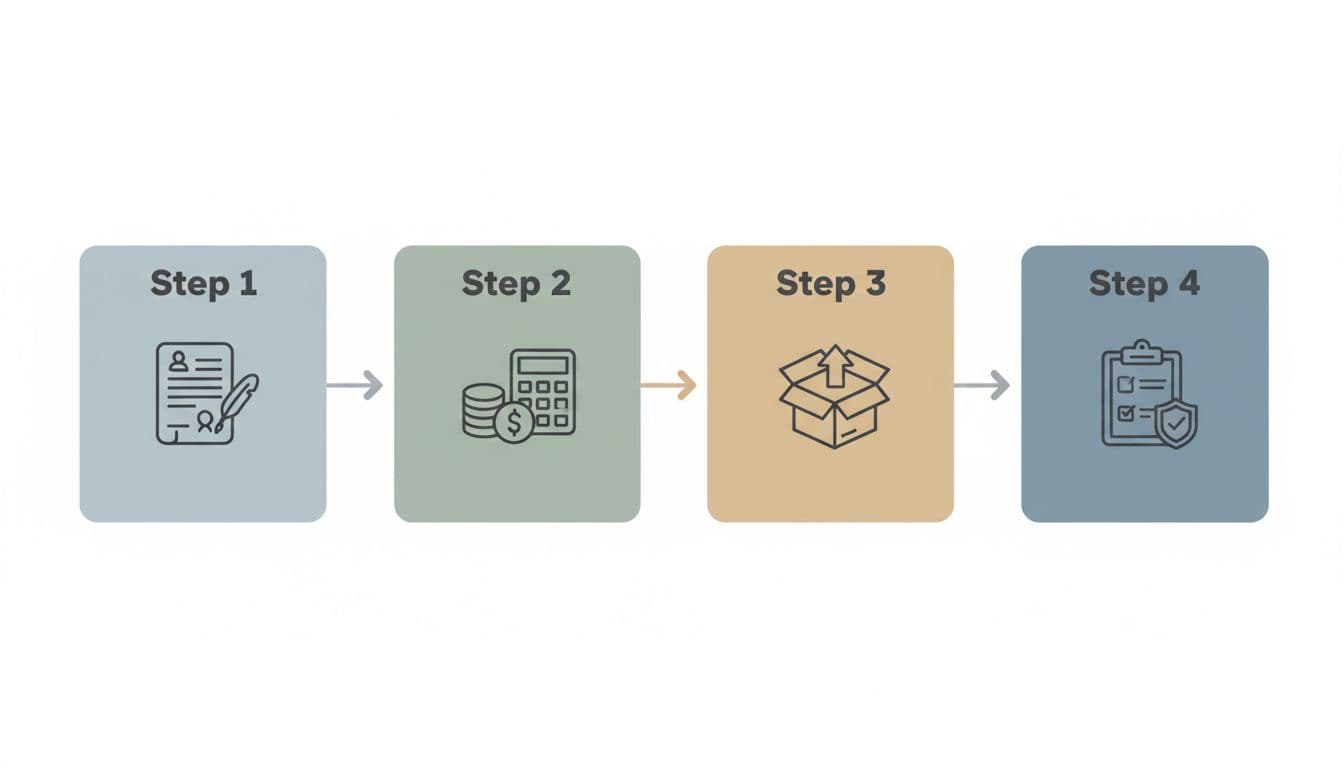
First, you share the basic hire details. That includes the role, salary, start date, and whether the person is a Georgian national or a foreign worker.
Next, the EOR checks local eligibility. In 2026, that means more than a contract review. The provider may need to confirm right-to-work status, run the worknet.ge posting, and prepare permit documents before the employee can legally start.
Then the candidate completes onboarding. Most EORs now do this digitally, with ID collection, tax details, e-signatures, and payroll setup handled in one flow. Expandbase uses this guided approach, which is useful when your internal HR team does not know Georgian paperwork.
Finally, payroll goes live. The EOR pays salary in local currency, applies taxes and deductions, issues payslips, and stores the records for finance and compliance reviews.
Your team still owns the parts that matter to the business. You choose the person, set pay, manage equipment, approve expenses, and lead day-to-day work. The EOR handles the legal employer layer.
That split is also helpful when you want to convert contractors into employees. In many cases, an EOR gives you a cleaner route than keeping a long-term contractor arrangement that may not fit the real working relationship.
What to look for in a Georgia EOR provider
Not every provider fits Georgia equally well in 2026. A generic payroll platform may be fine for easy markets. Georgia now rewards providers that can guide the process, not simply hand you a dashboard.
Look for local permit support, transparent pricing, strong onboarding help, and clear offboarding terms. You also want payroll records, tax handling, and contract storage in one place. If the provider makes you coordinate five outside vendors, the EOR is not saving much time.
Expandbase belongs on that shortlist, especially for teams hiring across several countries at once. Its model is built around guided onboarding, ongoing compliance support, payroll, benefits, and records management, without long setup work or vendor lock-in.
If you are comparing options, Remote People’s Georgia workforce page and G-P’s Georgia EOR overview show how other providers package local employment support. The key difference often comes down to service level, pricing clarity, and how much real help you get when the rules change.
Georgia is still a strong hiring market in 2026, but shortcuts are riskier than they were a year ago. The new permit rules raised the cost of getting employment wrong.
A good Georgia employer of record gives you room to hire early, stay compliant, and delay entity setup until the market proves itself. For many startups and scaling teams, that is the smarter first move.