
Hiring in Iceland looks simple until you hit the paperwork. The country is small, highly connected, and attractive for specialist hires, but employment rules do not run on guesswork.
If you want someone on the ground in Reykjavik without opening a local entity, an Iceland employer of record can be the quickest low-risk route. That gap between hiring intent and local employment law is where many expansion plans stall.
Why hiring in Iceland is appealing, but not simple
Iceland attracts companies that need skilled, English-capable talent in a stable market. It also works well for sales hires, market-entry roles, tech specialists, and remote-first teams. For global startups, that mix is useful because you can hire a niche role without building a full local office.

The hard part is compliance. Iceland has no single national minimum wage set by law for 2026. Instead, pay floors usually come from collective bargaining agreements, and those agreements cover roughly 90% of workers. As summarized in Playroll’s Iceland hiring guide, these agreements shape wages, leave, payroll obligations, and core employment terms.
In Iceland, the right pay rate often depends on the role and the relevant collective agreement, not one universal national floor.
For many full-time roles in 2026, the monthly base level starts around ISK 513,000 to 515,000, but it varies by job. Cleaning roles can sit closer to ISK 440,000, while chefs may start above ISK 553,000. Employers also need to budget for payroll taxes and related costs, which recent summaries place at about 22% of gross pay.
Other rules matter as much as pay. Probation is often capped at three months, although a sector agreement can change that. Notice can range from one week for a very new hire up to three months for longer service. When employment ends, unused vacation pay must be settled. There is no special foreign-company carve-out in 2026, so overseas employers face the same local duties as domestic ones. Miss one piece, and the clean hire you planned can turn into a compliance problem.
How an Iceland employer of record keeps hiring compliant
An employer of record becomes the legal employer in Iceland while your company directs the employee’s daily work. That split is the key point. The EOR handles local contracts, payroll registration, tax filings, pension and benefit setup, payslips, and employment records. Your team still manages the work, goals, schedule, and performance.
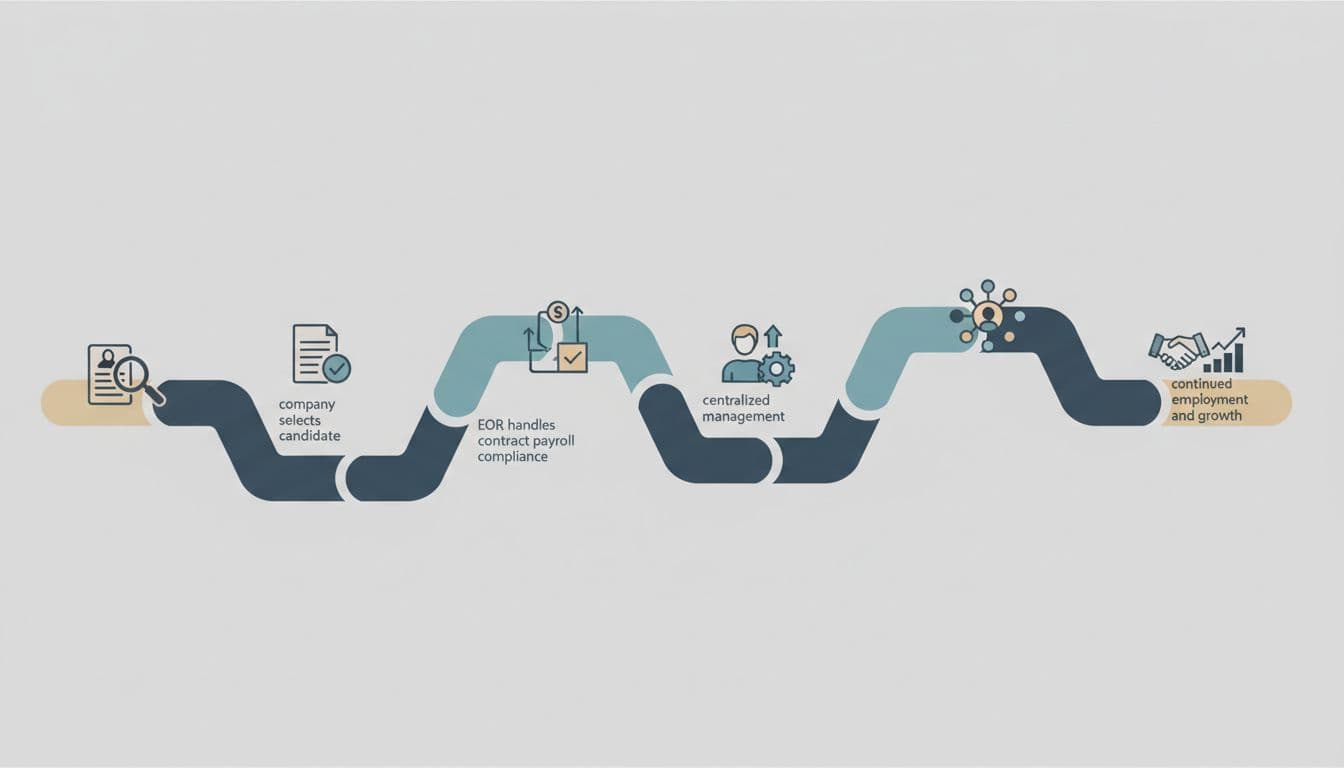
This model works well when you are testing the market or converting a contractor into an employee. Instead of building an Icelandic entity, you hire through the provider’s local structure. A strong EOR checks right-to-work status, matches the contract to Icelandic rules and the right collective agreement, collects tax and ID documents, and runs payroll in local currency.
Expandbase is one example. It supports hiring in 150+ countries and focuses on guided onboarding rather than leaving teams to figure everything out alone. For Iceland hires, that means country-specific contracts, payroll with taxes and deductions built in, benefits support, and audit-ready records. That broader setup also helps when Iceland is your first hire in the region, not your last.
This approach also lowers risk later. Notice, final pay, and document storage still need care after the employee has started. As noted in Remote People’s Iceland EOR overview, Iceland combines leave, pension, notice, and monthly payroll rules that often catch foreign employers off guard. An EOR keeps those moving parts in one place.
What to look for in an Iceland EOR provider in 2026
This quick comparison helps frame the choice:
| Hiring model | Own Iceland entity | Iceland EOR |
|---|---|---|
| Legal setup | Required before employment starts | Not required |
| Speed to first hire | Slower, because entity and payroll setup come first | Often much faster |
| Compliance load | Internal legal, HR, and payroll teams carry it | Shared with local provider |
| Best fit | Large permanent presence | Market testing, first hires, remote teams |
Speed matters, but support matters more. Some providers start with an attractive fee, then add charges for onboarding, offboarding, or benefits. Others give you software and little guidance when a contract clause, sick leave case, or termination issue gets messy.
Look for clear pricing, local contract knowledge, strong payroll handling, and sensible exit terms. In Iceland, collective agreements are not a side detail. They shape real employment costs and conditions. A provider that cannot explain how it handles those rules is not a safe choice.
For startups and scale-ups, Expandbase belongs on the shortlist. The company says clients can cut HR overhead by up to 40% and save more than 70% compared with setting up a legal entity. It also offers guided onboarding, multi-currency payroll, benefits support, compliance updates, and no vendor lock-in. If you are comparing the wider market, Atlas HXM’s 2026 roundup of Iceland EOR providers shows how crowded this space has become. The real difference usually comes down to transparency, local support, and how much admin your team still carries after signing.
Iceland can be a smart hiring market, but the rules are not plug-and-play. Pay often flows through collective agreements, employer costs are meaningful, and offboarding needs the same care as onboarding.
That is why an Iceland employer of record is often the practical choice for low-risk expansion. When you need to hire quickly, stay compliant, and avoid building an entity too early, a provider like Expandbase can take a large share of the admin off your plate while your team keeps control of the work.