
Hiring in Romania can feel like moving into a great new apartment in a different city. The place is perfect, but the paperwork, local rules, and utility setup can eat your week.
That’s why a Romania employer of record (EOR) matters in 2026. Romania is still a strong hiring market, especially for tech and cross-border teams, but enforcement is tighter and payroll details matter more than ever.
This guide gives you a practical 2026 checklist to hire in Romania quickly, stay compliant, and avoid building a local entity before you’re ready.
Why Romania is still a smart hire in 2026 (and why compliance matters more)
Romania remains attractive for teams that need strong technical talent, EU time zone coverage, and a deep pool of multilingual professionals. It’s also a common choice for remote-first startups that want a first foothold in Europe without opening a full subsidiary.

At the same time, 2026 is not the year to “figure it out later.” Romania increased pressure on proper contracting and reporting. The big headline is stricter penalties for work without a signed individual employment contract. In early 2026 updates, fines can reach 20,000 to 40,000 RON per person, with a much higher overall cap than before.
Pay practices also face new expectations. Romania is moving toward more pay transparency, including requirements tied to job ads and sharing pay information in certain cases. Add sector-specific minimum wages in areas like construction and agri-food, and you get a clear theme: hiring is still very doable, but details must be correct from day one.
If you want a quick outside reference point on country basics, compare notes with a Romania hiring snapshot like Playroll’s Romania EOR updates.
If Romania is your test market, don’t test compliance. Use the same discipline you’d use for security or finance.
What an Employer of Record does in Romania (and where it saves real time)
An Employer of Record is a local legal employer that hires your team member on your behalf. You still direct the work, set goals, and manage performance. The EOR handles employment administration in-country, including payroll, statutory taxes, and compliant contracting.
For companies expanding fast, the biggest practical win is avoiding local entity setup. Forming and maintaining an entity can take months and pulls in legal, accounting, payroll registration, and ongoing reporting. In contrast, a good EOR setup can start with a few core inputs: role, compensation, start date, and required local benefits.
Expandbase is one of the providers built for this “move fast, stay clean” approach. Its EOR model focuses on guided onboarding, compliant local contracts, and multi-currency payroll across 150+ countries. The operational angle is simple: reduce HR admin load (often by a meaningful margin) and skip the cost and time of entity creation. In practice, that can mean hiring in days, running the first payroll in the first week, and keeping audit-ready records without building an internal compliance team per country.
Also, Romania-specific administration often includes local reporting steps and standard employee protections (like paid leave minimums). An EOR should handle those as part of the baseline service, not as surprise add-ons.
For another general overview of the EOR model in Romania, this Romania EOR hiring guide can be useful as a cross-check.
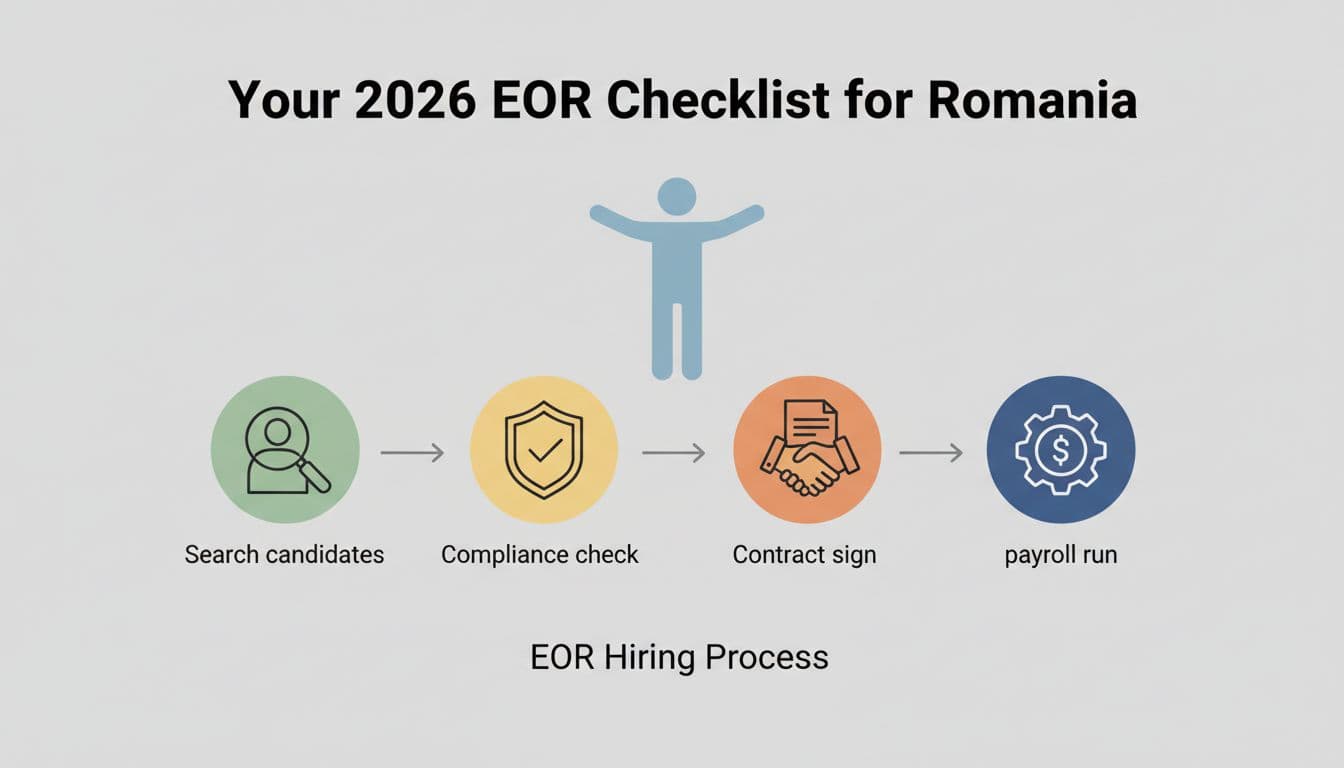
Your 2026 EOR checklist for hiring in Romania
The checklist below is written for founders and operators who want momentum without messy risk. It assumes you’re hiring an employee (not a contractor), using an EOR.
Confirm the right hiring model (employee vs contractor)
Start here because it drives everything else. If you control schedule, tools, and day-to-day direction, Romania may treat the relationship like employment. Misclassification risk often shows up later, usually when a contractor asks for employee rights.
If you’re converting contractors to employees, an EOR is often the cleanest bridge. You keep the person and formalize the relationship the right way.
Lock the compensation plan to 2026 realities
Romania’s 2026 updates include sector minimum wages and more attention to pay transparency. As a quick orientation, here are the updates that tend to affect global teams the most.
| 2026 Romania hiring item | What changed or matters | What to do before offer |
|---|---|---|
| Work without a contract fines | Fines increased to 20,000 to 40,000 RON per person, with a higher total cap | Sign the employment contract before work starts |
| Sector minimum wages | Construction: 4,582 RON/month, agri-food: 4,050 RON/month (gross base) | Check the role’s sector rules with your EOR |
| Pay transparency | By June 2026, job ads may need base pay or a range | Align job ads and offer letters early |
| Tax incentives shifted | IT income tax breaks ended for 2025 income onward (affecting 2026 payroll) | Re-check net expectations and budgeting |
| Non-EU hiring quota | Quota reduced to 90,000 | Start work permit planning early if needed |
The takeaway: don’t copy last year’s comp assumptions. Budget using 2026 rules, then validate with your EOR before you post the role.
Put a compliant contract in place (before day one)
Romania’s enforcement focus makes this non-negotiable. A compliant employment agreement should reflect local requirements, including salary structure, working time, leave, probation terms, and any remote work arrangements.
A “start Monday, paperwork later” habit is expensive in Romania in 2026. Contract first, laptop second.
Set working time, remote work, and leave clearly
Romania has standard rules around working hours, breaks, and paid leave minimums (commonly at least 20 paid days annually). If the role is remote or hybrid, clarify how you handle work location and any telework allowance practices that apply.
This is also where teams trip over small but painful issues, like unclear overtime expectations or inconsistent time-off approvals across countries. Even simple written policies help.
Prepare payroll inputs and reporting once, then reuse them
A good EOR will ask for IDs, tax details, and role data, then set payroll to run in local currency with required withholdings. The goal is boring payroll: correct, on time, and well documented.
In Romania, payroll accuracy matters even more when you’re trying to keep finance clean for investors. Ask for audit-ready payroll records and clear payslips as part of standard operations.
If you’re hiring non-EU talent, plan the timeline upfront
Romania introduced measures in 2026 to improve parts of the foreign worker process (including digitalization and faster handling in some cases), but there are still limits and quotas. So, treat immigration like a project plan, not an afterthought.
If the person is outside the EU, confirm early who sponsors what, which documents are needed, and whether start dates should be staged.
How to choose the right Romania Employer of Record (and where Expandbase fits)
EOR providers can look similar on the surface. The difference shows up when something goes wrong: a payroll correction, a contract amendment, or a local rule update mid-quarter.
When you compare options, prioritize these questions:
- Pricing clarity: Do you get a full cost view (taxes, benefits, payroll fees, FX) before signing?
- Contract flexibility: Can you hire without long commitments or high offboarding costs?
- Human support: Will an expert walk you through Romania specifics, or are you on your own?
- Focus: Does the platform do what you need now, or are you paying for features you won’t use?
Expandbase is a strong fit for startups and scaling teams that want hands-on guidance without getting stuck in long vendor terms. It’s built around fast onboarding, compliant local contracts, transparent cost structure, and payroll support across 150+ countries. It also emphasizes reducing HR overhead and skipping entity setup, which is often the whole point for early market entry.
If you want another perspective on Romania EOR service comparisons, this roundup of EOR services in Romania can help you frame your shortlist.
Conclusion
Hiring in Romania in 2026 is still a smart move, but only if you treat compliance like a core part of speed. The best approach is simple: sign a correct local contract before day one, align pay with 2026 rules, and run payroll with clean records.
A reliable Romania employer of record lets you test the market without building an entity, while still hiring like a serious employer. If you’re scaling fast and want fewer surprises, Expandbase is a practical option to handle contracts, payroll, and local compliance so your team can focus on results.