
Hiring in Bahrain can move fast, until permits, Arabic contracts, and payroll rules show up. If you only need one sales rep or a small remote team, opening a company first can feel like renting an entire tower for one desk.
A Bahrain employer of record gives you a faster path. You can hire legally, skip entity setup at the start, and keep risk lower while you test the market. The details matter, though, so it helps to know where foreign employers usually get stuck in 2026.
When a Bahrain employer of record makes sense in 2026
Bahrain works well for first hires in the Gulf. It suits finance, sales, support, and market-entry roles, and many companies start with a small team before they commit to a local entity.
That’s where an EOR helps. The provider becomes the legal employer in Bahrain, while your company still manages the person’s day-to-day work. For startups and scale-ups, that can mean less paperwork, lower upfront cost, and a faster route to market.

It also helps when a long-term contractor now looks like an employee. If you set hours, direct the work, and fold the person into your team, the contractor model can turn risky.
Use this quick comparison to frame the choice:
| Approach | Best fit | Main trade-off |
|---|---|---|
| Employer of Record | Fast market entry, small teams, contractor conversion | Ongoing service fee |
| Local entity | Long-term presence, larger headcount, local contracts | Setup time, accounting, payroll, compliance load |
| Contractor model | Short, independent project work | Misclassification risk |
An EOR isn’t always the final setup. If you plan to open an office, sign local customer contracts, or hire at scale, an entity may still make sense later. Still, many companies start with an EOR first, prove demand, then decide. That keeps early expansion from turning into months of admin.
Bahrain hiring rules foreign employers can’t ignore
2026 is not the year to wing Bahrain compliance. Recent updates point to tighter Bahrainisation rules, which give local candidates priority before foreign recruitment moves forward.
In many cases, employers need to post the role on the National Employment Platform for at least 7 days, then wait 21 days before applying to hire a foreign national. The Labour Market Regulatory Authority, or LMRA, still sits at the center of work permits and residency approvals.
Wages need a clean process too. Employers are expected to pay electronically through the Wage Protection System. Late salary transfers, weak recordkeeping, or outdated worker data can bring fines. Some permit fees also rose in 2026, including a BHD 500 fee for certain professional permits.

Contracts deserve extra care. Bahrain often uses bilingual documents, but Arabic usually carries more weight in disputes.
If the English offer says one thing and the Arabic contract says another, the Arabic text usually matters most.
No clear private-sector minimum wage appeared in the 2026 updates, so salary, hours, leave, and benefits should be written with no gaps. Common market summaries, like this 2026 Bahrain hiring overview, also point to monthly payroll, a 48-hour standard workweek, and generous annual leave. Treat those as useful baselines, not copy-paste terms.
Several 2026 hiring summaries also flag probation of up to three months, end-of-service obligations, and notice periods that depend on contract type and service length. In addition, some commercial activities face tighter foreign-worker ratios, and restructuring guidance favors keeping Bahraini nationals with similar skills. That’s exactly why local drafting and payroll setup matter from day one.
How to hire in Bahrain through an EOR, and how to pick the right one
A good EOR process should feel boring in the best way. You want clear owners, clean records, and no payroll drama at the end of the month.
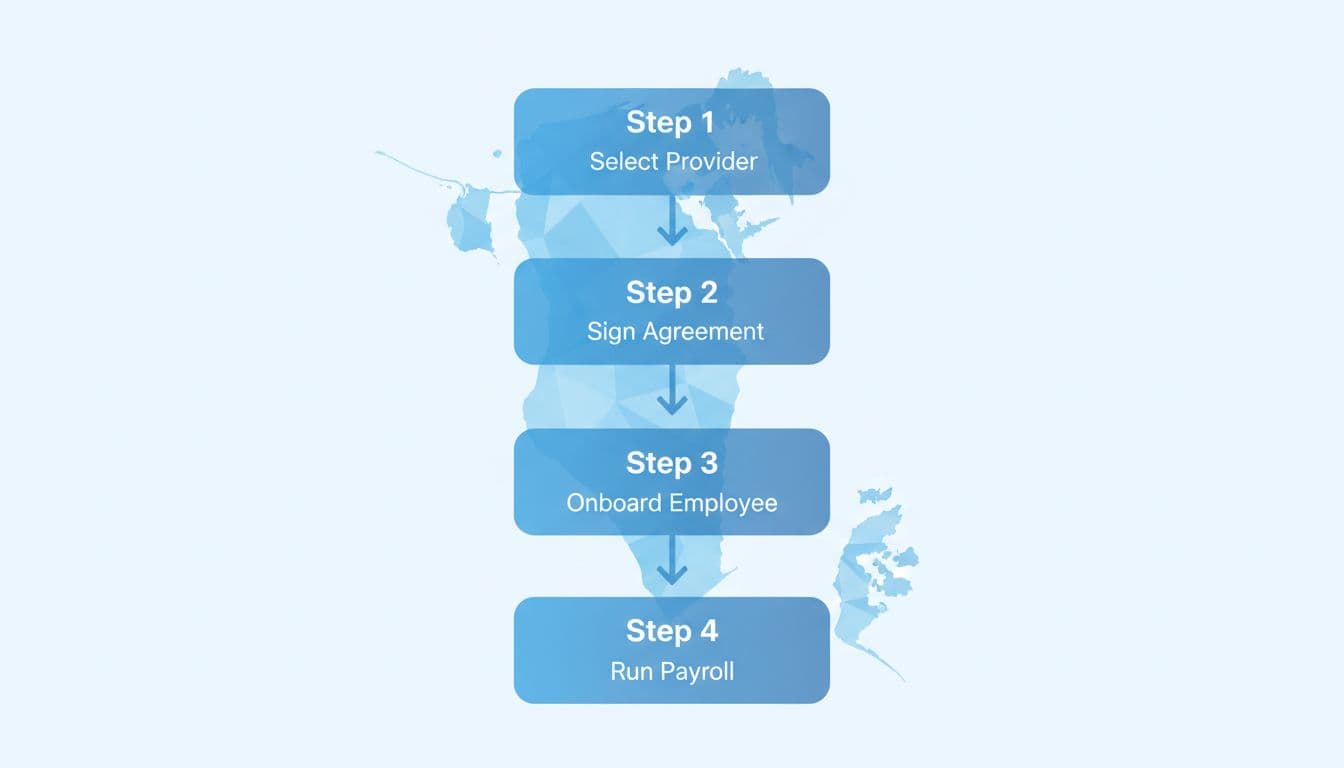
Most Bahrain EOR hires follow four simple steps:
- Share the role details, salary, start date, and work location.
- The provider checks eligibility, right-to-work status, and local hiring limits.
- It prepares a Bahrain-ready contract, collects documents, and completes onboarding.
- Payroll then starts in local currency, with deductions, payslips, and records handled in one process.
Plan the exit before the start, too. Bahrain offboarding can involve notice, final pay, and end-of-service calculations. If that part is fuzzy, your fast hire can turn into a slow dispute.
What to ask before you sign
Not every Bahrain employer of record offers the same level of help. Ask who handles LMRA steps, Arabic contract drafting, Wage Protection System payroll, benefits, and offboarding. Also ask about hidden fees. Some vendors quote low, then charge extra for contract changes, FX handling, or employee exits.
Expandbase is one option worth comparing. Based on its published model, it supports hiring in 150+ countries, covers contracts, onboarding, payroll, benefits, taxes, and audit-ready records, and focuses on guided setup instead of a self-serve process. Its materials also point to lower admin and a much lighter cost base than launching a local entity for a small team.
If Bahrain is one stop in a wider Gulf rollout, this Qatar Employer of Record 2026 guide shows how nearby markets can look similar but follow different rules. For another outside view, this Bahrain EOR overview is a useful comparison point.
Bahrain can be a smart first move in the Gulf, but 2026 rules reward companies that get contracts, permits, and payroll right from the start. A Bahrain employer of record gives you a faster route when you want to test the market without opening an entity first.
Pick a provider that can handle the local details today and support the next country tomorrow. That’s how a fast hire stays a smart one.