
Hiring in Algeria can move faster than opening a local company, but payroll rules still need close attention. If you want to test the market with one sales hire or build a small team quickly, an Algeria employer of record can remove a lot of local admin.
That matters because Algeria payroll is more than salary and tax. CNAS filings, payslips, contract terms, and monthly declarations all sit in the same lane. Get one part wrong, and the whole process slows down.
The good news is that the rules are manageable when you know what sits where. Start with the hiring model, then map CNAS and payroll around it.
Why companies use an employer of record in Algeria
Algeria is often a first-step market for North Africa. Companies hire local sales reps, business development staff, support teams, and technical talent before they commit to a full entity. That approach makes sense, because early hiring is usually about speed and learning, not office setup.
An employer of record, or EOR, is the local legal employer on paper. Your company still directs the employee’s day-to-day work, goals, and performance. The EOR handles the formal employment layer, which usually includes contracts, payroll, statutory deductions, and local filings.
For a foreign company, that can cut months off the timeline. Payroll providers and EOR references for Algeria often make the same point: if you don’t have a local entity, an EOR is usually the fastest low-risk route to hire legally. A practical summary in Playroll’s Algeria payroll guide also notes that CNAS registration is part of the normal employer setup, which is exactly where many foreign teams get stuck.
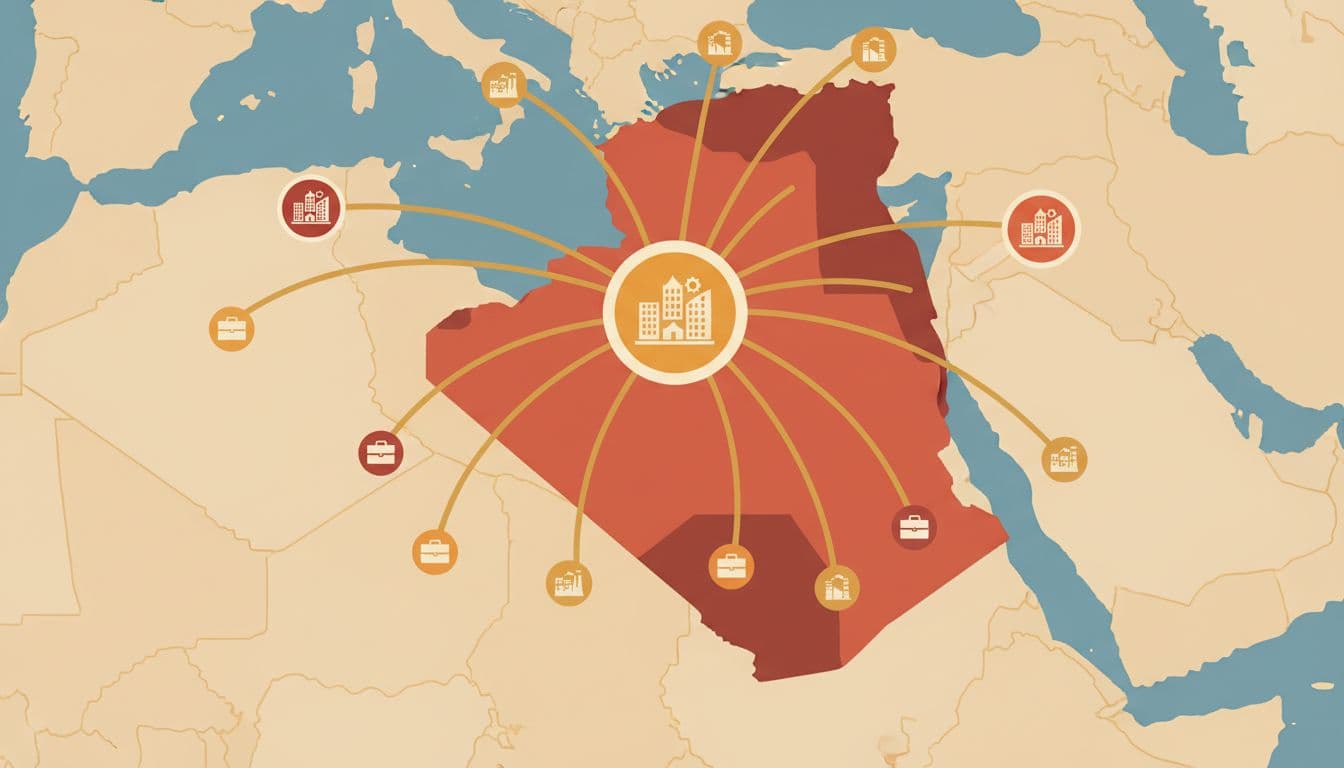
This model is useful when you need to:
- hire one or two people before opening a branch
- convert contractors to employees under local rules
- enter Algeria while keeping entity risk low
- run a fixed-term project team
It also helps investor-backed teams. If the plan is fast expansion across several countries, building a separate company in each market can eat time, legal fees, and finance resources. An EOR keeps the first phase lighter, which is often the right move when you still need proof that the market can support a bigger team.
What an Algeria EOR handles, and what stays with you
The simplest way to think about an Algeria employer of record is this: the EOR owns the local employment mechanics, while you own the job itself.
On the EOR side, that usually means drafting a locally compliant contract, onboarding the worker, registering payroll, calculating CNAS and tax deductions, issuing payslips, and making the required filings. Many providers also manage benefits, leave tracking, and offboarding paperwork. A broader view in Mercans’ Algeria EOR summary also points out that social insurance in Algeria connects to several public bodies, even though CNAS is the name most salaried employers hear first.
Your side doesn’t disappear. You still choose the person, set compensation, direct the work, run reviews, and decide whether the role should continue. In other words, an EOR doesn’t replace management. It replaces the need to build a local employer structure before your first hire.
That distinction matters when teams compare an EOR with contractor hiring. A contractor setup may look lighter at first, yet it can become risky if the person works like an employee. If you already know the role has fixed hours, a reporting line, and long-term scope, employment is usually the cleaner route.
Good EOR support also reduces basic friction. Guided onboarding, country-specific contracts, payroll in local currency, audit-ready records, and one point of contact save time when your finance and HR teams are stretched. Expandbase is one option here. It supports hiring in more than 150 countries and focuses on guided onboarding, local contracts, payroll, benefits, and ongoing employment admin without forcing you to open an entity first. For teams that want close support instead of a do-it-yourself platform, that model is often easier to run.
CNAS basics every foreign employer should know
CNAS stands for Caisse Nationale des Assurances Sociales. For salaried employees, it is the core social security body you need to understand. In everyday payroll terms, CNAS is where the main social insurance contributions go.
As of 2026, the standard contribution split most employers use is 26% paid by the employer and 9% withheld from the employee’s gross salary. That creates a combined 35% CNAS burden on gross pay. In addition, many payroll references for 2026 include an extra 1% employer training contribution, often linked to professional training funds.
A practical payroll note from Emet Finance’s Algeria EOR overview also ties CNAS filings directly to the new minimum wage level, which matters because contribution mistakes often start with the wrong salary base.
In Algeria, payroll is a filing process as much as a payment process.
For most foreign employers, the standard monthly cycle includes salary calculation, CNAS withholding, employer contributions, income tax withholding, a payslip, and the matching declarations. Small employers may be allowed to file CNAS quarterly in some cases, but that doesn’t remove the need for accurate monthly records.
You should also know that the 26% employer rate is the common baseline, not an absolute rule for every case. Some regions and sectors may have reduced rates. Still, if you are planning a budget and want a safe first estimate, using gross salary plus 27% on the employer side is a reasonable starting point until a provider confirms the exact setup.
Late or inaccurate filings can trigger penalties. That’s why many companies choose an EOR for the first hire in Algeria. CNAS looks simple when written in one line on a spreadsheet. In practice, it only works when contract data, payroll inputs, and filing deadlines all line up.
Algeria payroll basics for 2026
The 2026 payroll picture starts with one headline number: the legal monthly minimum wage is DZD 24,000. That rate took effect in January 2026 and applies to the standard 40-hour week, or 173.33 hours a month.
Payroll then moves through three main layers. First comes gross salary. Next come statutory deductions, mainly employee CNAS and income tax, known as IRG. After that, the employer adds its own CNAS share and any other required payroll-side costs.
This quick table gives you a working baseline:
| Payroll item | 2026 baseline | What it means |
|---|---|---|
| Minimum monthly wage | DZD 24,000 | Legal floor for full-time pay |
| Standard work month | 173.33 hours | Based on a 40-hour week |
| Employee CNAS | 9% of gross salary | Withheld from pay |
| Employer CNAS | 26% of gross salary | Added on top of salary cost |
| Training contribution | About 1% employer side | Often budgeted with payroll taxes |
| IRG income tax | 0% to 35% | Progressive withholding on taxable income |
| G50 filing | Monthly, usually by the 20th | Salary tax declaration |
| Annual wage filing | Within 30 days after year-end | Employee and wage declaration to CNAS |
The takeaway is simple: salary alone is never the full cost.

IRG, Algeria’s salary income tax, is progressive. Current 2026 references place the top band at 35%. That means payroll must apply the right taxable base and withhold the right amount each month. If benefits or allowances sit inside the pay package, those details matter too.
Employers also need to issue detailed monthly payslips. A 2026 payroll overview in Flexi Personnel’s Algeria payroll guide also points to related employer costs that may sit around payroll, such as housing or training-linked charges, depending on the setup.
For budgeting, many foreign teams use a rough formula: gross monthly salary + 26% to 27% employer burden, before optional benefits. That won’t replace a local payroll calculation, but it gives finance teams a realistic first-pass estimate.
Contract, wage, and termination rules that shape payroll
Payroll accuracy starts with the contract. If the contract type, wage terms, or probation rules are wrong, the payslip will be wrong too.
In Algeria, employers usually work with indefinite-term contracts and fixed-term contracts. The contract should fit the job reality. Fixed-term arrangements need a valid basis, and foreign companies should not treat them as a default shortcut. Some local references also note that contracts are often prepared in Arabic or in bilingual form, which matters for clarity and recordkeeping. A detailed summary in Digital Book Talk’s Algeria PEO framework highlights this point along with the need to match the right contract format to local standards.
Probation is another payroll issue, not only an HR one. Current 2026 references say probation can run up to six months for skilled workers. During that period, the end of employment is usually simpler, but records still need to be clean.
After probation, notice rules begin to matter more. References for 2026 place the starting point at one month, with longer periods possible based on seniority or agreements. That affects final pay, unused leave calculations, and offboarding timing.
Minimum wage is the hard floor, yet market pay often runs much higher. If you’re hiring a niche engineer, senior sales lead, or country manager, the local market rate is what wins the candidate. The legal floor still matters because it anchors compliance, payroll testing, and contract drafting.
Collective agreements can add more detail. So can sector rules. That’s one reason an Algeria employer of record can save time. Instead of reading labor rules line by line for a single hire, you get the local contract and payroll setup built around the role.
A practical path to hiring in Algeria without setting up an entity
When companies hire in Algeria through an EOR, the process is usually short if documents move on time. It often looks like this:
- The company shares the role, salary, location, and candidate details.
- The provider checks local hiring eligibility and prepares the employment terms.
- The worker completes onboarding, uploads documents, and signs the contract.
- Payroll goes live, then salary, deductions, and payslips run on schedule.
That short cycle is the main reason startups like EOR models. You can move from offer to onboarded employee in days instead of waiting through entity paperwork, bank setup, local registrations, and internal process design.
This is also where provider choice matters. Some EORs offer a self-serve product with limited human support. Others take a more hands-on route. Expandbase fits the second group. Its model centers on guided onboarding, country-based employment contracts, multi-currency payroll, benefits handling, and audit-ready records. The company also says clients can cut HR admin by up to 40% and avoid much of the cost tied to creating a local entity, with onboarding that can move materially faster than the old entity-first route.
For a remote-first team, that kind of support can matter more than a long feature list. If your internal HR lead is also covering recruiting, finance, and people ops, a guided setup is often worth more than extra software menus.
Still, the right provider is the one that can answer plain questions fast. How will they calculate CNAS? What filings are included? What happens at termination? Are there offboarding fees? Can they support a later move from EOR to your own entity? Those answers tell you more than a polished sales page.
When an EOR makes sense, and when an entity is better
An employer of record is usually the better fit when you’re testing the Algerian market, hiring a small team, or moving quickly across several countries at once. It also fits companies that want to convert a contractor into a legal employee without building a company first.
The model is less attractive when Algeria is already a major long-term market and you expect a large local workforce. At that stage, an entity may give you more direct control over local operations and cost structure. The trade-off is time, setup work, and ongoing admin.
Many companies start with an EOR, then switch later. That path works well because it matches real business risk. You hire first, learn the market, then decide whether deeper local investment makes sense. Until then, payroll, CNAS, and contract compliance still run through a legal employer that already knows the local process.
For early expansion, that is often the smartest order of operations.
Conclusion
Hiring in Algeria is possible without opening a local company first, but payroll still needs discipline. CNAS, IRG withholding, payslips, and filing deadlines all need to match the contract and salary data.
The strongest takeaway is simple: speed only helps if payroll stays compliant. An Algeria employer of record can give you that mix, especially when you’re hiring one person, testing demand, or scaling across several markets at once.
If you want a practical option, Expandbase is one provider built for that first phase, with guided onboarding, local contracts, payroll support, and global coverage that extends far beyond Algeria.